About Uncontrolled Gout
Gout Prevalence and Impact
Gout is the most common, progressive, systemic inflammatory arthritis in adults, impacting more than 9 million people in the US. Men are more likely to experience gout than women. However, due to estrogen’s uricosuric effect, gout is less common in women before menopause, but with increasing age, the male-to-female gender ratio decreases.1-5

~170,000
It is estimated that uncontrolled gout affects ~170,000 people in the United States.5-8*
*The number of uncontrolled gout patients was estimated by applying the rate of uncontrolled gout patients to the total gout population in 2024. Total gout population derived from the 2015-2016 National Health and Nutrition Examination Survey (NHANES) patient-reported gout prevalence survey adjusted for over-reporting and population growth. Rate of uncontrolled gout patients derived from Intercontinental Medical Statistics (IMS) Health and Quintiles (IQVIA) Longitudinal Access and Adjudication Data (LAAD) Claims.5-8
What Is Uncontrolled Gout
Uncontrolled gout is defined as persistent, sustained serum uric acid (sUA) levels of >6 mg/dL despite urate-lowering therapies1,2
and 2 or more recurrent flares per year1
or Non-resolving tophi that are painful and may lead to bone erosion and joint deformity1,2
MSU Crystals and Chronic Inflammation
For patients with uncontrolled gout, persistently elevated sUA can lead to deposits of monosodium urate (MSU) crystals throughout the body, which can lead to chronic inflammation, progressive and painful flares, and long-term joint and organ damage.2,3,9,10
MSU Deposition Throughout the Body3,9-12
MSU crystals are not known to cross the blood-brain barrier.15
Urate Deposition Persists Even Between Flares
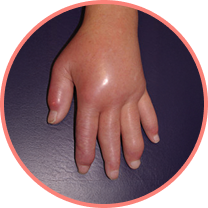
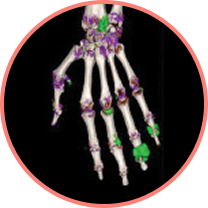
Urate deposition in joints and tissues and the subsequent damage can happen even when patients are symptom free during intercritical periods.13,14
Gout Flare
Intercritical Gout
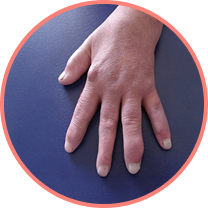
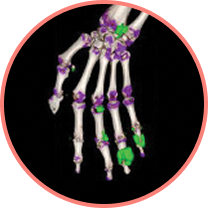
Controlled Gout
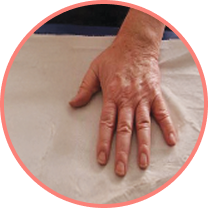
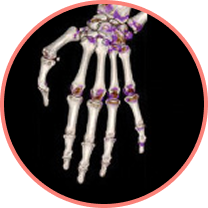
Dual Energy CT (DECT) scans show urate deposits (green) remain during both active inflammation and symptom-free phases, reinforcing the rationale for long-term therapy.

Sign Up for Updates
Be the first to know about our updates in uncontrolled gout.
The information provided on this website is intended for healthcare professionals (HCPs) for informational and educational purposes only. It is not intended to replace the independent clinical judgment of HCPs in diagnosing or treating individual patients.
References
1. Morlock RJ, et al. Rheumatol Ther. 2025;12(1):37-51. 2. Francis-Sedlak M, et al. Rheumatol Ther. 2021;8(1):183-197. 3. Timsans J, et al. J Clin Med. 2024;13(24):7616. 4. Li L, et al. Am J Transl Res. 2020;12(7):1367-3181. 5. GBD 2024 Gout Collaborators. Lancet Rheumatol. 2024;6(8):e507-e517. 6. Chen-Xu M, et al. Arthritis Rheumatol. 2019;71(6):991-999. 7. McAdams MA, et al. J Rheumatol. 2011;38(1):135-141. 8. Data on file. US CRG Patient Estimates. August 2025. Sobi internal analysis based on claims data and literature review. 9. Dalbeth N, et al. Lancet. 2021;397(10287):1843-1855. 10. Elgafy H, et al. World J Orthop. 2016;7(11):766-775. 11. Ahmad Ml, et al. Front Med (Lausanne). 2021;8:649505. 12. Khanna P, et al. J Clin Med. 2020;9(10):3204. 13. Fields TR. Rheum Dis Clin North Am. 2019;45(1):145-157. 14. Doghramji PP, et al. Postgrad Med. 2012;124(6):98-109. 15. Baratta F, et al. Metabolites. 2024;14(11):642.